


When you're hosting a game night, it really just boils down to a few key things: choosing your guests, picking the right games, and setting the date. The goal is to create a fun, low-stress vibe where everyone, from hardcore gamers to total newbies, can just relax and have a good time.
Your Blueprint for an Unforgettable Game Night
Think of this as your no-fuss guide to hosting a game night that’s all fun and zero stress. We’re going to get right into the nuts and bolts of what takes a simple get-together and turns it into something legendary. This is about more than just plopping a game on the table; it’s about crafting an experience filled with laughter and some friendly competition.
This simple timeline breaks down the whole process, from picking your crew to locking in the schedule.
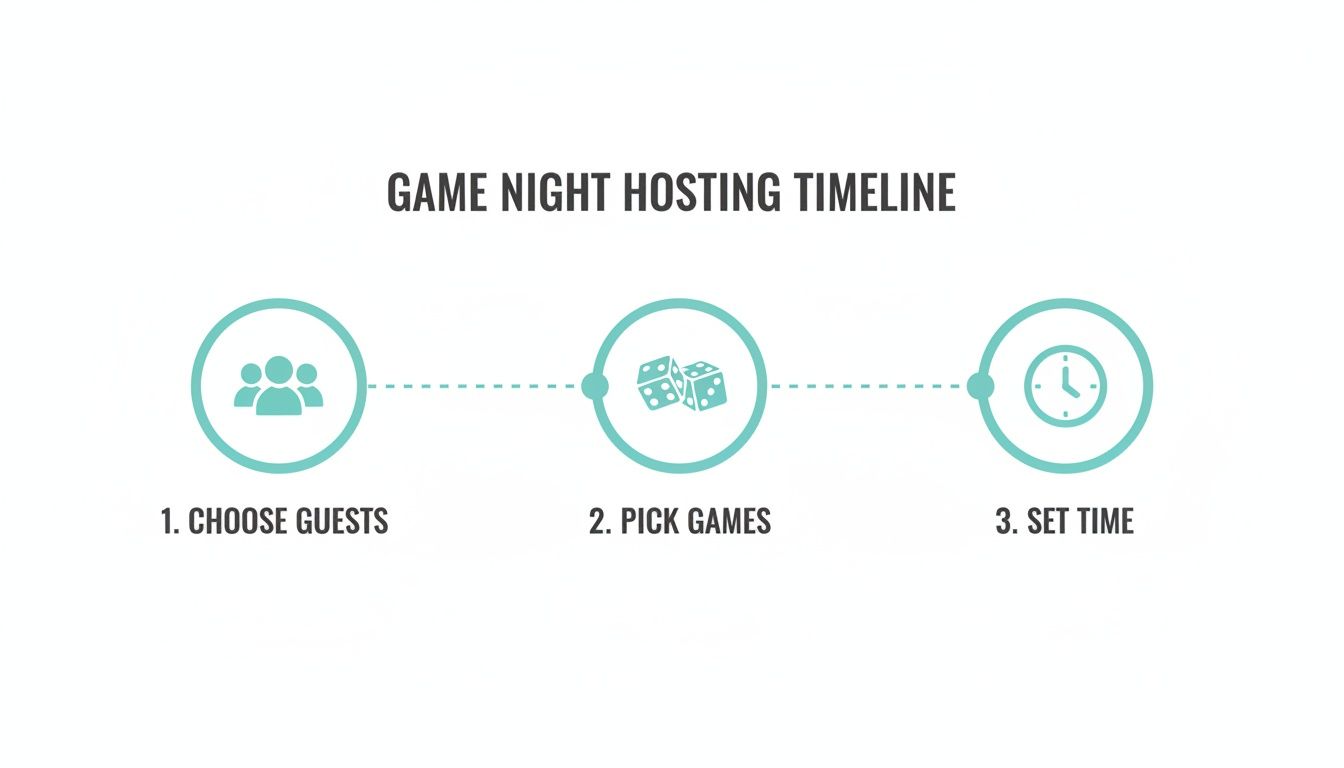
When you look at it this way, you realize pulling off a fantastic game night is way easier than it seems.
Getting Started the Right Way
The explosion in board game popularity says a lot about how much people are craving real-life connection. We're talking about a global market expected to hit around $15.83 billion in 2025 and projected to soar to an incredible $39.34 billion by 2034. This boom is all about people wanting to ditch their screens for a bit, and North America is right at the heart of it.
Think of your plan as a confidence builder. It all starts with having some easy-to-learn, endlessly fun games that click with your group. Once you've got a great game lined up, the rest of the planning just falls into place. If you need some ideas, check out our guide on fun board games for groups of all sizes.
A wise friend once told me, “The goal of any game isn’t just to win. It’s to get invited back to play again.” That’s the perfect host mindset. Focus on the shared experience, not who’s winning or losing.
Beyond just picking the right game, a little bit of hosting know-how can make sure your night goes off without a hitch. You can even find inspiration from other types of get-togethers; this guide has some great general hosting advice that applies to just about any party.
Figuring Out Your Vibe and Guest List
Let's be real: the secret ingredient to a killer game night isn't the dip or even the game on the table. It's the people. A few weeks out is the perfect time to start dreaming up your ideal crew and the kind of atmosphere you want to create.
Are you aiming for a rowdy, laugh-till-you-cry party? Or maybe something a little more chill and thinky, with good conversation and a complex board? Neither is better than the other, but knowing what you’re going for is the first real step. It helps you build a guest list that will actually click and ensures everyone, including you, has a blast.
Who to Invite
This is your chance to play social matchmaker. Think about mixing friends from different circles. That one friend who's a natural storyteller, your coworker who loves a good puzzle, and your easy-going neighbor? Throw them together! The best nights often happen when you bring together interesting people who you know will get a kick out of each other.
Once you’ve got a rough list, get those invites out. A quick text or a fun digital card from a site like Evite or Paperless Post works great. Just make sure you include the essentials:
- Date and Time: A clear start time is a must, and a general end time is a nice-to-have.
- Location: Your address, obviously! Maybe a note on parking if it's tricky.
- The Vibe: Give them a hint! Something like, “Get ready for some chaotic party games” or “Breaking out a new strategy game I'm excited to try” helps set expectations.
- RSVP Date: This is your lifeline for planning how much food to get and which games will work.
If you're new to hosting, don't feel like you have to invite everyone you know. Four to six people is the magic number. It's intimate enough for everyone to feel included but big enough to keep the energy flowing.
Matching Games to the Group
As the "yes" replies start rolling in, you can get to the fun part: picking the games. This is where your host-intuition really shines.
If you know you've got a bunch of creative, witty people coming over, a game like Ransom Notes is practically guaranteed to be a hit. You're just trying to make the most ridiculous sentences possible with a handful of word magnets. It’s pure gold.
But maybe your crowd is more into a relaxed, cooperative vibe. In that case, a gorgeous, low-stress game like Bloomchasers is the way to go. It lets everyone focus on building something beautiful together without any cutthroat competition. For more ideas that work with a wide range of personalities and ages, check out our guide to the best family board games. They’re designed to be crowd-pleasers.
Thinking about your guests' personalities when you pick the games isn't just a nice touch; it's a hosting superpower.
Choosing Your Games and Setting the Scene
Alright, with about a week left on the clock, the big picture is coming together. Now it’s time to dial in the details that turn a good game night into a great one. This is all about locking in your game selection and getting your space ready for action. Nailing these things now means you’ll be way less stressed on the day, freeing you up to actually have fun with your friends.
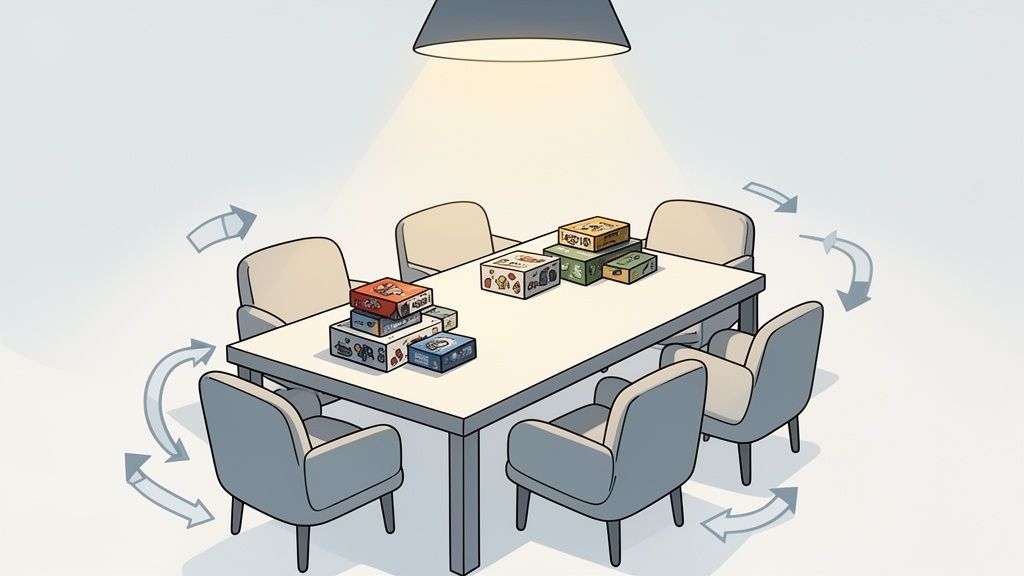
This is the perfect moment to think about what will really land with your specific group. Think about their experience with modern board games and the general vibe you’re shooting for. A little bit of thoughtful matchmaking between your friends and your games goes a very long way.
Picking the Perfect Games
The games you choose are the heart of the evening. Having a few solid options ready to go ensures you can keep the energy up and avoid that awkward "What should we play next?" moment.
The biggest factor here is player count. If you’ve got a smaller, more intimate group of four to six people, a game like Venns with Benefits is an absolute winner. It’s all about clever wordplay and gets people talking as they try to guess where hilarious phrases fall on overlapping Venn diagrams.
For a bigger, more boisterous crew, you need something that can handle more players without getting bogged down. A game like Abducktion is a fantastic choice for larger groups because it's super easy to learn, looks hilarious on the table, and keeps everyone invested in its quirky quest to abduct the right ducks.
Don't overcomplicate it. The best game nights are built on games that are easy to explain and quick to get started. The goal is shared laughter, not a two-hour rules lecture.
It’s also pretty cool to see how broad the audience for board games has become. Players aged 12-25 make up a whopping 38% of the crowd, with the 26-40 year-olds right on their heels at 31%. This wide appeal is exactly why accessible party games are such a smash hit for mixed-age groups just looking to have a good time.
To help you find the right fit, here's a quick guide based on the kind of night you're planning.
Game Selection Guide Based on Your Crew
| Vibe | Player Count | Suggested Game | Why It Works |
|---|---|---|---|
| Chill & Chatty | 4-6 | Venns with Benefits | Encourages conversation and clever thinking without being overly competitive. |
| Loud & Lively | 5-8+ | Abducktion | Simple rules, fast turns, and a silly theme that gets everyone laughing. |
| Competitive Fun | 4-6 | Taco vs Burrito | Easy to learn but has enough strategy to satisfy a competitive itch. |
| Icebreaker | Any | Poetry for Neanderthals | Forces players to be goofy and creative, breaking down barriers instantly. |
Picking from a list like this, or finding others that fit these molds, takes the guesswork out of your planning.
Creating the Right Environment
Once you’ve got your games lined up, it’s time to think about the physical space. This is more than just tidying up; it's about crafting an environment that feels welcoming and makes playing easy. Think of it as creating a dedicated "game zone."
Start with the seating. Arrange your chairs so everyone can easily see the board and, more importantly, each other. Good conversation is key! If you’re at a dining table, make sure there’s enough elbow room. For a more casual game on the floor or a coffee table, toss around some pillows to make things comfortable.
Good lighting is another unsung hero of game night. You need it bright enough for people to read their cards without squinting, but you don't want it to feel like a hospital waiting room. A combination of overhead light and a warmer lamp or two usually strikes the perfect balance.
Finally, do a little "pre-game" prep on the components.
- Unbox and Punch: If a game is new, get it out of the shrink wrap. Punch out all the little cardboard tokens and unwrap any decks of cards. Nobody wants to do that when they're ready to play.
- Get Organized: Use small bowls or containers to hold all the different bits and pieces. This keeps the table from becoming a chaotic mess and makes setup a snap.
- Skim the Rules: Give the rulebook a quick read-through yourself. You don’t need to be a world-class expert, but having a basic grasp will make teaching the game so much smoother.
By tackling these little things a week beforehand, you're setting the stage for a relaxed, fun night. If you need more ideas, you can always explore a curated list of the best board games for game night to find even more inspiration.
Mastering Game Day Snacks and Hosting Duties
Alright, the big day is here! Your guests are about to start rolling in, and the pre-game excitement is building. This is your moment to shine as the host. From here on out, two things will make or break the night: the food and how you steer the ship.
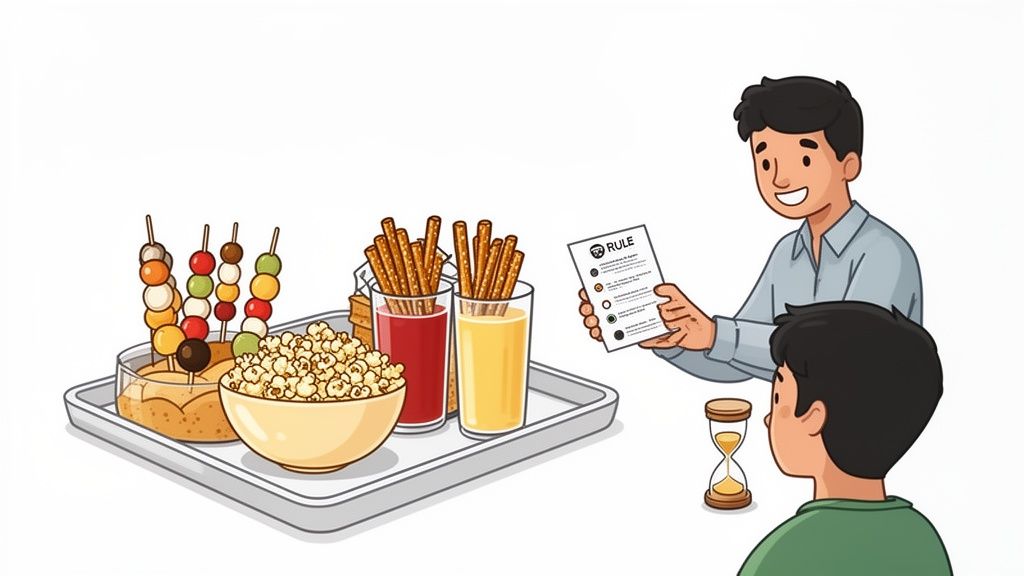
Let's talk snacks first. This isn't the time for a fancy sit-down meal that requires a fork and knife. You need game-friendly fuel. Think one-handed, non-greasy, low-crumb foods that won't leave a trail of destruction on your favorite board game.
Fueling the Fun The Right Way
Here’s a pro tip I swear by: set up a dedicated snack station away from the gaming table. A kitchen island, a small side table, even a cleared-off bookshelf will do the trick. This creates a buffer zone that protects your precious game components from the inevitable cheesy-finger apocalypse.
Need some ideas? Here’s a tried-and-true menu that keeps things clean and delicious:
- Salty & Savory: Pretzels, cheese cubes, mini sausages, and veggie sticks with a dip like hummus are all safe bets.
- Sweet Treats: Think grapes, brownie bites, or cookies that don’t explode into a million crumbs.
- Drinks: Cans and bottles are your best friends. They're way less likely to spill than open cups. I usually fill a cooler with ice and a variety of options so guests can just help themselves.
If you want to get a little fancier, there are tons of great healthy snack alternatives to junk food that will keep your friends happy and your game pieces pristine.
Your Role as the Game Master
Beyond the snacks, your real job as the host is to be the friendly facilitator of fun. You don't have to be a walking encyclopedia of rules, but a little prep goes a long, long way. Your main mission is to keep things moving and make sure everyone feels included.
Teaching the rules is easily the most nerve-wracking part for most hosts. The key is to be quick and clear. Please, whatever you do, don't just read the rulebook out loud. It's a total vibe killer.
Instead, start with the main goal of the game. "The first person to 10 points wins." Then, just walk everyone through a single turn, moving the pieces as you explain. For a game like Tiny Laser Heist, you can even get a jump on it by watching the quick video instructions ahead of time.
Your job isn't to be a strict referee; it's to be the group's cheerleader. Celebrate the funny moments, encourage the shy players, and just keep the energy positive.
Creating a Loose Schedule
Having a rough timeline for the evening really helps keep things on track without making it feel like a boot camp. It's just a simple way to make sure you get to everything you planned.
Here’s a sample flow that works well for a three-hour game night:
- First 30 Minutes (Arrival & Mingle): As guests show up, point them toward the drinks and snacks. Let them settle in and chat. This is the perfect warm-up period.
- Next 60-90 Minutes (Main Game): Once everyone's there, gather 'em up and introduce the main event. Keep the rules explanation under five minutes if you can, then dive right in.
- Last 60 Minutes (Filler Games & Wind-Down): After the big game wraps up, you can switch to a couple of quicker, lighter party games. This is also a great time for people to grab another drink and just hang out before they head home.
This simple structure helps manage the flow of the night, making sure everyone has a great time from start to finish.
Sidestepping Common Game Night Pitfalls
Look, even with the best-laid plans, game nights can get a little weird. It happens! The real skill of a great host isn't in preventing every possible issue, but in rolling with the punches so gracefully that nobody even notices there was a bump in the road.
Let's talk about troubleshooting those classic, slightly cringey moments. A little foresight goes a long way in keeping the good times rolling and making sure everyone, including you, leaves happy. Remember, the goal isn't a flawless event; it's a fun one.
Wrangling Awkward Player Dynamics
People are the heart of game night, but they're also the most unpredictable variable. Here’s how to handle a few familiar archetypes you might find at your table.
-
The Alpha Gamer: We've all played with one. The person who's not just playing to win, but to dominate. Instead of letting them steamroll the fun, try a strategic pivot. Suggest a cooperative or team-based game next. This channels their competitive energy into a group asset rather than a force of solo destruction.
-
The Phone Scroller: What about the guest whose face is illuminated by their phone screen? A direct call-out can feel confrontational. Instead, gently pull them back into the action. A simple, "Hey Dave, what do you think of this move?" or "Alright, you're up next!" is usually enough to break the trance.
-
The Fashionably Late Arrival: Someone waltzes in an hour late, right as you're deep into a complex game. No problem! This is why you keep a quick, easy-to-learn game in your back pocket. For some fantastic options, check out our list of the best card games for parties that are perfect for players to jump into anytime.
When the Game Is the Problem, Not the Guest
Sometimes, the issue isn't a person. It's the game itself. Maybe the rules are a slog, or the vibe just isn't landing with this particular crew. Whatever the reason, don't feel obligated to suffer through a dud.
Never be afraid to call it. A simple, "You know what, team? I'm not feeling this one. How about we switch to something else?" is a lifesaver. It gives everyone permission to admit they weren't having fun either.
This is your moment to be the hero. Having a reliable, crowd-pleasing backup game ready to deploy is your ultimate safety net. Pulling out a tried-and-true favorite shows you can read the room and are more committed to the group's fun than to any specific game on the agenda. That's the secret to hosting a game night that feels effortless.
Your Top Game Night Questions, Answered
Even the most seasoned host has those little "what if?" moments before guests arrive. Don't worry, that's completely normal. Let's tackle some of the most common questions I hear so you can walk into your game night feeling like a pro.
Think of this as your personal FAQ for smoothing out the details. Getting these sorted means you can actually relax and enjoy the night with your friends. Remember, the host is allowed to have fun, too!
How Many Games Should I Actually Have Ready?
I always aim for two or three main games I'm excited about, plus one or two quick "filler" games just in case. For a standard three-hour get-together, you'll realistically play one bigger game and maybe a couple of fast, silly ones.
It’s all about having options. You'd much rather have an extra game sitting on the shelf than have the energy die down an hour before people are ready to head home.
What's the Best Way to Teach the Rules Without Boring Everyone?
Nobody wants to sit through a lecture. The trick is to keep it short and get people's hands on the components immediately.
Start with the single most important sentence: "Okay, so in this game, we're all rival wizards trying to brew the most valuable potion before the moon sets." Then, physically walk through what a single turn looks like. Pick up the pieces, move the tokens, and explain the why behind each action.
The absolute golden rule of teaching is show, don't just tell. Whatever you do, don't just read the rulebook out loud. It's a vibe killer. Jump into a practice round and let the questions come naturally. People learn best by doing.
My Friends Have Wildly Different Tastes. What Games Should I Pick?
This is my favorite challenge! Cooperative games and social party games are your secret weapons here. They totally level the playing field. Your super-competitive strategy-loving friend and your cousin who's never played a board game can have a great time together because it’s about teamwork and creativity, not crushing the competition.
Go for games that spark conversation and laughter. Kicking things off with a simple icebreaker is also a brilliant move to get everyone warmed up and in a playful headspace. The goal is shared fun, not a cutthroat tournament.
How Do I Handle Food Without Getting Greasy Fingerprints on Everything?
Ah, the eternal game night problem. The solution is simple: create a dedicated snack zone away from the main gaming table. A coffee table, a bar cart, or your kitchen island is perfect.
Fill it with what I call "board game-friendly" snacks, things that are low-mess and easy to grab.
- Pretzels
- Grapes
- Cheese cubes
- Mini cookies or brownies
This creates a little buffer that protects your precious cardboard while keeping the good stuff easily accessible.
Ready to build your game night library? Very Special Games has you covered with everything from hilarious party starters to engaging family games. Check out our collection of games you'll want to play again and again at https://www.veryspecialgames.com.